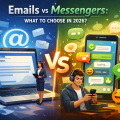


Emails will still matter because it does one thing no other channel can do at the same level: it gives businesses a direct, permission-based line to people who already agreed to hear from them.
Emails has been “about to die” for more than a decade, yet it keeps delivering results. Industry studies consistently show that email remains one of the highest-ROI marketing channels. Conversion rates from email still outperform most social and display channels, especially for repeat purchases and B2B sales. These numbers hold steady even as platforms, algorithms, and privacy rules change.
In 2026, email does not disappear. It becomes a channel where discipline, relevance, and respect for the reader are rewarded.
AI and automation trend
By 2026, AI in email marketing will feel less like a novelty and more like a quiet assistant working in the background. To understand where it helps, it is important to separate two things that are often mixed together:
1. Automation follows clear rules: “If a user signs up, send a welcome email.”
2. Generative AI works with probabilities: it suggests text, predicts behavior, or chooses options based on patterns in data. In email marketing, rules should handle structure and timing.
AI already helps teams with very concrete tasks. It can suggest subject lines based on past performance. It can swap content blocks inside an email depending on what a person viewed last. It can score audiences by likelihood to buy or churn, and it can adjust send time based on when each person usually opens emails.
A simple way to adopt AI:
- Use it to generate subject line variants and test them, add one dynamic content block that changes based on recent behavior, and enable basic send-time optimization.
- Build a behavioral scoring model that ranks leads or users, connect product events to lifecycle emails, and group subscribers by intent rather than demographics.
- Check for bias in recommendations, watch for repetitive or generic text, and review any content that makes claims or promises.
Every AI-generated email should pass a human review. Prompts should be saved and reused, so tone stays consistent. Sensitive areas such as pricing, legal language, and guarantees should stay manual.
Privacy-first email trend
Tracking based on third-party cookies is fading. Inbox providers and regulators expect clear consent and limited data use. In response, email marketing is shifting toward what businesses already own: first-party data and direct interactions.
The core idea: collect less data, but collect it openly.
When someone subscribes, explain what they will receive and why. Track actions that happen inside your own product or website, such as pages viewed, features used, or emails clicked. Store this data securely and for a clear purpose.
A basic privacy steps:
— Redesign consent so it is readable and specific.
— Replace third-party trackers with consented, first-party events.
— Review how long data is stored and remove what is no longer needed.
One effective way to validate this approach is to test it. Some teams run an A/B test where half of new visitors see a short, plain-language consent message with a preference center, while the other half sees an older, complex version. The result is often fewer total sign-ups, but higher-quality subscribers who open and click more often.
Inbox evolution trend
Inboxes work less like static folders and more like living systems. Mailbox providers use machine learning to decide which emails deserve attention. They look at engagement signals such as opens, reading time, replies, deletes, spam complaints, and long-term behavior.
Each message is scored and ranked. Emails that consistently help users tend to land in the primary inbox. Emails that are ignored, deleted, or marked as spam slowly lose visibility.
This shift changes the logic of deliverability, it is no longer about sending more messages. It is about sending expected and useful ones.
There are still technical basics that must be right, because inbox systems use them as trust signal:
— Authentication is configured correctly so mailbox providers can verify who sent the email.
— Sending patterns are steady, without sudden spikes or long pauses.
— Lists are clean, with inactive addresses removed regularly.
— Complaints and unsubscribes are handled quickly and respectfully.
Interactivity and lightweight design trend
These include small elements such as expandable sections, simple animations, live countdown timers, or forms that collect responses without leaving the inbox. When used well, they reduce friction. When overused, they slow emails down and confuse readers.
The main advantage of interactivity is speed. A person can RSVP to an event, choose a time slot, or preview product options without opening a new page.
This works well for simple decisions. A webinar invite that lets subscribers confirm attendance inside the email usually gets more responses than one that sends everyone to a long landing page. At the same time, complex actions still belong on the website. Configuring a full product bundle or filling out a detailed application works better outside the inbox.
Design rules matter more than features. Emails should load fast, read well on mobile, and stay accessible. This means keeping file size small, using clear fonts, and providing fallback content for inboxes that do not support interactive elements.
A safe way to roll out interactivity follows a clear checklist:
— Test emails across major inboxes and devices.
— Always include a simple fallback version.
— Limit interactive elements to one clear action.
— Track performance separately to see if interactivity adds value.
New KPIs and measurement trend
Open rates used to be the main way to judge email performance. That made sense when inboxes were simpler and tracking was reliable. By 2026, opens tell only part of the story. Some emails are opened automatically, others are read without being tracked, and privacy tools blur the data.
Modern email teams focus on a small set of business metrics:
— Revenue per send shows how much money each campaign generates.
— Cohort lifetime value shows how email affects customers over time, not just in the first click.
— Incremental lift answers the hardest question: what would have happened if the email had not been sent at all.
Attribution does not need to be complex to be useful. Many teams start with last non-direct attribution to see where email fits before conversion. As maturity grows, multi-touch views help explain how email supports other channels.
The most reliable method is a simple holdout test. Split a segment in two. One group receives the email. The other does not. After a fixed period, compare purchases or sign-ups. The difference is email’s real impact. Even small teams can run this test once a month and build confidence in their numbers.
FAQ
Is email dead?
No. Email continues to deliver strong ROI because it is owned, permission-based, and measurable. What changed is how carefully it must be used.
Is personalization safe under new laws?
Yes, when it relies on data people knowingly shared. Using on-site behavior or stated preferences is acceptable and effective.
Can small lists still win?
Yes. Smaller lists often outperform larger ones because relevance is easier to maintain. A list of 5,000 engaged readers can outperform 50,000 inactive ones.
How much should I automate?
Automate timing and structure. Keep message intent and key claims under human control.
It's time to try LetsExtract (it's free)
 Click here to download the LetsExtract Email Studio

The trial version will allow you to create a contact list, check email addresses and start mailing.