
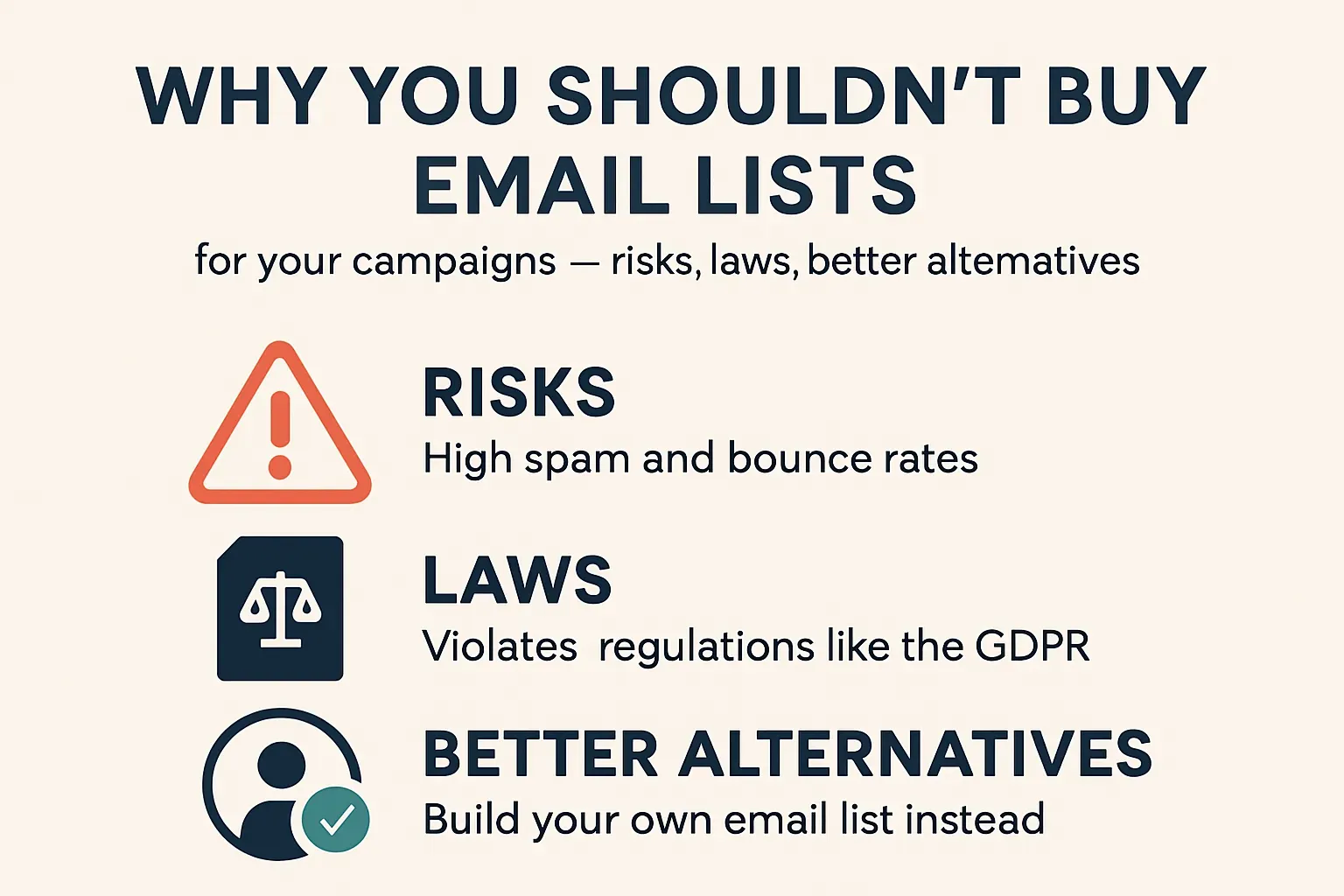

Many novice entrepreneurs or marketers eventually wonder: what if I just buy a ready-made list of email addresses? Why spend months building a list when with one click you can get tens of thousands of contacts for a relatively small amount? It sounds tempting, but in reality, it’s one of the worst mistakes you can make in email marketing.
Let’s figure out why buying lists is not only useless but also dangerous.
Why buying email lists looks tempting — and why it fails
For many entrepreneurs and marketers, the idea of buying a ready-made email list sounds like a shortcut. Building your own audience takes time. You need content, ads, landing pages, and patience before the first thousand people sign up. A purchased list promises the opposite: instant access to tens of thousands of contacts for the price of a nice dinner. When you’re under pressure to show quick results, that option can feel hard to resist.
The logic seems simple. More addresses should mean more chances to sell. If someone offers you 20,000 “qualified leads” for $50, it looks like a bargain. One company did just that — imported the list into their email service and hit send. The open rate landed at 2 percent. Within a week, the provider flagged the account for spam complaints. What started as a cost-saving move turned into wasted money and a suspended campaign.
These cases are common because purchased lists almost never work the way buyers expect. They create short-term volume, but they fail at the one thing email marketing depends on: sending relevant messages to people who actually asked to hear from you. And that’s where the real risks begin.
Top risks of purchased email lists
- Spam complaints
People on that list never agreed to hear from you. When they see your email, many of them hit the “spam” button. A few complaints are enough for inbox providers to start distrusting your domain. Over time, your emails stop reaching the inbox, even for contacts who did sign up.
- Bounces
A large part of cheap lists usually contains outdated or fake addresses. When you send to them, the emails come back as undeliverable. High bounce rates are a red flag for email platforms. They read it as a sign that the sender is careless or abusing the system. That often leads to account suspension.
- Blacklists
Internet providers and spam filters keep track of domains and IP addresses that send to bad lists. If you get caught, your future emails are blocked automatically. It’s like having your phone number tagged as a scam caller—people never even see your message.
- Legal risk
In the U.S., the CAN-SPAM Act requires consent and clear unsubscribe options. In Europe, GDPR rules are even stricter, with heavy fines for sending emails without permission. Canada has CASL, which works in a similar way. For a small business, a fine in the tens of thousands of dollars can be devastating.
- Brand damage
Even if you avoid fines and blacklists, the people who receive unwanted emails will remember your company in the worst way possible. Instead of being curious about your product, they connect your name with spam. That reputation is hard to rebuild and directly affects sales conversations later.
What happens with a purchased list?
Think about those who have already bought such lists. These lists have often been used by dozens or even hundreds of people before you. The email owners are already used to receiving tons of promotional junk, so they simply ignore such emails, or in the worst case, actively complain about spam.
This is where the real problems begin: your domain and the SMTP server’s IP address can end up on blacklists, which can lead to serious sanctions.
But that’s not all. Even if part of the list turns out to be “live,” those people are unlikely to be interested in your products—your messages are completely irrelevant to these recipients because they never consented to receive them. In the end, you get zero response, wasted money, and a damaged reputation.
How deliverability and sender reputation actually work
Email deliverability is about whether your message lands in the inbox or disappears into the spam folder. The decision isn’t random. It depends on how email providers, like Gmail or Outlook, rate your reputation as a sender.
There are two main reputations to think about:
- The reputation of your IP address — the “computer address” that sends the emails.
- The reputation of your domain — company’s web address, like yourcompany.com.
Providers track both. If either gets a bad history, your emails start going straight to spam or are blocked altogether.
How do you get a bad reputation? It usually happens when too many emails bounce or too many people complain. A bounce is when you send to an address that doesn’t exist anymore. If you bought a list, it’s almost guaranteed to contain many of those. Complaints are even worse. Every time someone clicks “mark as spam,” it sends a signal that you’re sending unwanted messages. Providers don’t need many of these signals before they act.
The cause-and-effect chain is simple. You buy a list, send a big campaign, and get high bounces and complaints. That lowers your sender reputation. Once your reputation is damaged, inboxes start rejecting your messages. Even people who signed up willingly stop seeing your emails.
The easiest way to avoid this spiral is to test before you send. A simple seed test—sending to a small internal list or monitoring tools—can show if your emails are landing in the inbox or spam folder.
Why your own list is the best investment
Now think about what is most important in email marketing. It’s not the quantity of addresses, but the quality of the list. A list of people who consciously signed up for your newsletter, trust you, and are genuinely interested in your products or services is immeasurably more valuable than millions of “dead” contacts from a purchased list.
How do you build a quality list? It requires more effort than buying one, but it pays off many times over. Here are a few strategies to get started:
- Create useful and interesting content that motivates people to subscribe.
- Drive traffic to a dedicated landing page via ads or blog content.
- Use automation methods, like email extractors, to gather addresses from websites or based on keywords.
The main thing is to build trusting relationships with your subscribers. If you offer them something valuable, rather than just selling, your list will remain active and engaged.
If you already bought a list
If you have a purchased email list, the first step is to quarantine it. Do not send it through your main domain. Using your primary sending address risks blacklists, complaint spikes, and account suspension. Run a quick legal check to see if any of the addresses fall under GDPR, CAN-SPAM, or CASL restrictions.
Next, test the list safely. Send a small batch to a separate domain or a seed list to see how inbox providers react. Monitor bounce rates and complaints closely. If too many addresses bounce or generate spam reports, stop immediately. Remove addresses that clearly do not work, such as invalid emails or repeated hard bounces.
Once the list is clean enough, you can attempt a re-permission campaign. Start with a friendly email asking people to confirm they want to receive messages from you. A simple template could be:
| Subject line | Do you still want to hear from us? |
| First paragraph | Hi, we recently acquired your contact and want to make sure you’re interested in receiving updates and offers from us. If you’d like to stay on our list, please click the button below. If not, you won’t hear from us again. |
Give recipients one clear option to confirm or unsubscribe. Send only to those who actively opt in. If a large portion of the list does not respond or declines, it’s safer to delete the remaining addresses. This approach protects your deliverability, respects privacy laws, and helps maintain your brand reputation.
Email list hygiene: do’s and don’ts
Keeping your email list clean is essential for good deliverability and engagement. Every week, review your list for hard bounces—addresses that consistently fail to deliver—and remove them.
Suppress role-based addresses, like info@ or support@, because they are often shared by multiple people and rarely respond. Always respect unsubscribes immediately, removing anyone who opts out to avoid complaints.
There are tools and services that help manage hygiene. Many ESPs have built-in features to flag bounces and unsubscribes automatically. Third-party services can verify addresses for typos or inactive accounts.
Use these tools to maintain a healthy list, but avoid shortcuts that can cause more harm than good. Do not buy bulk validation services to “fix” a list where consent is missing. Cleaning a list without proper permission does not make it legal or safe to send.
Consistent maintenance keeps your campaigns effective, protects your sender reputation, and ensures your messages reach people who want to hear from you. Regular checks are simple, but skipping them can undo all your email marketing efforts.
FAQ
Is buying an email list illegal?
It depends on the laws in your region. In the U.S., CAN-SPAM requires permission and a clear way to unsubscribe. In Europe, GDPR requires explicit consent from each recipient. Canada’s CASL has similar rules. Sending to people without their consent can lead to fines and legal action, even if the list was purchased.
Can I clean a purchased list?
You can remove invalid or inactive addresses, but cleaning does not fix consent issues. If the people on the list never opted in, sending to them is still risky. Use hygiene tools to improve deliverability, but do not assume it makes the list safe to email.
How much does a purchased list cost versus building your own?
Cheap lists can cost a few cents per address, but they rarely convert and often harm your reputation. Building your own list takes more time and effort, but those subscribers are interested and engaged, giving much higher returns over the long term.
What is a spam trap?
A spam trap is an email address set up to catch senders using bad or outdated lists. Sending to a spam trap can quickly damage your sender reputation and block your emails from reaching real subscribers. These addresses are inactive and only exist to detect unsolicited email.
Conclusion & next steps
Buying an email list is a dead end. It’s not only a waste of money but also a risk of becoming a spammer with a ruined reputation. Instead of looking for easy shortcuts, focus on building your own list. Yes, it takes time and effort, but it’s precisely such lists that will bring you long-term success, a loyal audience, and steady revenue growth.
It's time to try LetsExtract (it's free)
 Click here to download the LetsExtract Email Studio
The trial version will allow you to create a contact list, check email addresses and start mailing.
Related posts:
 LetsExtract Update: build 9225 (April 2025)
 Find anyone’s email address legally: top manual techniques & automation tools
 Cold emailing in 2025: pros, cons & winning alternatives
 Omnichannel marketing: how to combine email, SMS, push & social
 Email extractors: a complete guide to charge your lead generation
