

Subscriber segmentation in a CRM means dividing your customer base into smaller, meaningful groups based on how people behave, what they buy, or how they interact with your company. In simple terms, it’s sorting your contacts so you can talk to each group in a way that makes sense to them.
Segmentation works best inside the CRM because it’s the only place where all customer data meets. The CRM holds personal details, purchase history, email activity, and notes from sales or support. When you group people there, your segments stay accurate and up to date. Every change—a new purchase, a support ticket, a click—automatically updates their profile. That’s what makes CRM-driven segmentation stronger than static lists or external spreadsheets: it uses live data about real behavior, not outdated exports.
Why businesses must segment
Segmentation is a way to make communication efficient and measurable. When every message goes to people who actually need it, open and click rates rise, conversions grow, and fewer emails end up in spam. Customers stay active longer, and each one brings in more value over time.
Segmentation means:
- A better return on every campaign. If one email brings ten leads instead of two, the cost of sending doesn’t change—but the outcome does. Sales teams feel the difference too.
- You can spot clients whose activity is dropping and reach out before the customer leaves. For example, if a long-term subscriber hasn’t logged in for two weeks, they get a quick check-in email instead of waiting until the contract expires. It’s a simple move that cuts churn and shows care.
- Understading who adopts new features and who doesn’t. If a new tool is tested by only one group—say, enterprise users—it’s a sign that the onboarding or pricing might not fit smaller clients.
Common segmentation types
— Behavioral
Groups people by what they do on your site or app: pages they visit, products they view, items added to cart, feature use, or email clicks. For example, a segment for “3 product views + no purchase in 14 days” catches shoppers who are likely to convert with a targeted nudge.
— Lifecycle and recency
Segments based on where a person is in their relationship with your brand: new, active, at-risk, or lapsed. If a customer shows no activity for 60–90 days, place them in a “winback” group and try a re-engagement flow.
— Value and monetary (RFM-style)
Uses purchase frequency, recency and total spend to separate low-value from high-value customers. Put repeat buyers with high lifetime spend into a loyalty stream and treat one-time, low-spend buyers with different offers.
— Demographic and firmographic
Splits contacts by personal or company attributes: job role, company size, age cohort, language, or timezone. Send messages timed to local hours for timezone-based segments or tailor product messaging to a particular job role.
— Product affinity
Targets people who show interest in a specific SKU, feature, or product category. If a user repeatedly views winter jackets, show them related styles or size-availability alerts.
— Engagement level
Measures how often someone opens or interacts with your messages (for example, opened 3 of the last 5 emails versus opened none). Use higher-frequency communications for engaged readers and gentle re-engagement for the inactive group.
— Channel and source
Segments by where the lead came from: organic search, paid ad, referral, or a specific campaign. People who arrived from a paid trial ad may need a different onboarding sequence than those who found you through content.
Starter segments to create
Begin with four practical groups you can build quickly. Each one targets a clear behavior and has an obvious next message to send.
New users — day 0–7
People who signed up in the last week. Put them in an onboarding drip that highlights one core action per email — for example, how to set up their account on day 1, a key feature on day 3, and a social proof or quick win on day 6. This improves activation because new users get step-by-step guidance instead of a single generic welcome.
High-intent non-converters
Visitors who viewed the same product 2–3 times in 14 days but did not buy. Send a targeted reminder showing that product’s benefits, a FAQ, and a small incentive if appropriate. This group converts at a higher rate because they already showed interest.
Loyal customers / high LTV
Contacts with 2+ purchases in the last 12 months or clearly above-average spend. Treat them to cross-sell offers, early access, or a loyalty reward. These customers are your best source of repeat revenue and respond well to premium, personalized offers.
At-risk / churn
Users with no activity for a defined window (commonly 30–90 days) or a clear drop in feature use (for example, usage down more than 30% month-over-month). Send a short check-in: a quick survey, a helpful tip, or an exclusive offer. Prioritized outreach here prevents churn and costs less than winning a new customer.
Data you need before segmentation
| Data item | Why it matters | How to capture |
| Primary delivery address and basic identifier for communication. | Signup form with validation; require/verify email on account creation. | |
| Contact ID | Stable internal identifier to link records across systems and prevent duplicates. | CRM-generated unique ID or backend user ID passed to CRM. |
| First seen date | Shows when a contact entered your system; helps build lifecycle-based flows. | Capture timestamp at signup or first event. |
| Last activity date | Measures recent engagement and flags at-risk or lapsed users. | Update from login, purchase, or other tracked events. |
| Basic source tag | Identifies acquisition channel or campaign for tailored messaging. | UTM parameters, hidden form fields, or a source field set at import. |
| Product views | Strong indicator of interest in a specific item or category. | Pageview tracking with product identifiers. |
| Cart adds | Signals purchase intent and enables abandoned-cart recovery. | Add-to-cart event fired from site or app. |
| Purchases | Core revenue data used for value segments and lifecycle status. | Order event with SKU, amount, and timestamp. |
| Email opens & clicks | Measures communication engagement and informs sending frequency. | Email platform tracking (open/click pixels and link tracking). |
| Order count | Shows purchase frequency for RFM-style segmentation. | Aggregate orders per contact in CRM/analytics. |
| Lifetime spend | Monetary value used to prioritize offers and loyalty treatment. | Sum of all order values associated with the contact. |
| Last purchase date | Critical for recency-based campaigns and winback timing. | Order timestamp stored on contact record. |
| Timezone | Ensures messages arrive at appropriate local hours. | User profile field, inferred from IP, or enrichment. |
| Language | Allows localization of subject lines and content. | User-selected preference or inferred from browser/profile. |
FAQ
How many segments is too many?
There’s no fixed number, but the rule is simple: every segment should have a clear purpose and a message tailored to it. If you can’t explain why a segment exists in one sentence, it’s probably unnecessary.
Many small businesses work effectively with five to ten segments. For example, one group for new users, one for loyal buyers, one for inactive contacts, and one for leads who viewed a product but didn’t purchase. Beyond that, it often turns into clutter that no one maintains.
How often should segments be reviewed?
At least once a quarter. Segments lose accuracy as behavior and product lines change. For instance, a “high-value customer” segment from six months ago might now include people who stopped buying entirely. If you use tools like LetsExtract, they can help you check and verify your lists quickly.
What if my CRM can’t do dynamic lists?
Start with static lists exported from your CRM or email platform. It’s less convenient but still useful. You can refresh these lists weekly or biweekly by reapplying filters and re-uploading them. The main goal is to get segmentation logic right first.
It's time to try LetsExtract (it's free)
 Click here to download the LetsExtract Email Studio
The trial version will allow you to create a contact list, check email addresses and start mailing.
Related posts:
 What’s the difference between email marketing and spam?
 How to personalize email newsletters: 7 steps to higher engagement
 Omnichannel marketing: how to combine email, SMS, push & social
 Why you shouldn’t buy email lists for your campaigns — risks, laws & better alternatives
 A/B testing in email campaigns: how to improve ROI
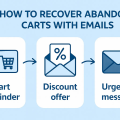 How to recover abandoned carts with emails
