

Email remains one of the most predictable marketing channels. When it is set up correctly, it brings steady revenue, repeat purchases, and long-term relationships with customers.
Most failed campaigns break down for the same reasons:
- the goal is vague or changes mid-way;
- the message goes to everyone instead of a specific group;
- the offer is weak or unclear;
- the email looks fine, but the page behind the button is confusing or slow.
To get value from email, every campaign needs a clear purpose. This purpose shapes everything that follows: who receives the message, what the email says, and how success is measured.
Define the campaign goal first
Before creating an email, you need to answer one question: what is this campaign supposed to achieve? An email campaign should have one primary goal and, at most, one or two secondary goals.
A practical way to set this goal is to keep it specific and measurable. For example:
✅ “Increase sales from last month” is too vague.
❌ “Generate purchases from customers who viewed a product in the last seven days” gives the team something concrete to work with.
Most email campaigns fall into three categories: revenue, awareness, or retention.
1. Revenue.
The email exists to drive a purchase. The main metrics are revenue per send and conversion rate. These campaigns usually include promotions, cart reminders, or transactional offers tied to clear intent. The tone is direct and practical.
For example, a short message that says, “The items you viewed are still in stock. Free shipping ends tonight,” works because the reader already showed interest and knows what action to take.
2. Awareness.
That campaigns aim to keep the brand visible and familiar. The signal here are unique opens, time spent on content, or engagement beyond the inbox, such as visits to key pages or follows on social channels.
These emails often tell a story, explain a product in simple terms, or share useful insights. You should not expect immediate sales from these sends, and that is fine.
3. Retention.
Focus on people who already bought from you. The goal is to bring them back and keep them from leaving. Key metrics include repeat purchase rate and churn reduction. Typical emails include onboarding sequences, product tips, renewal reminders, or early access for returning customers. The tone here is supportive and personal.
Problems start when these goals get mixed in one campaign. An email that tries to sell, educate, and build loyalty at the same time usually does none of these well.
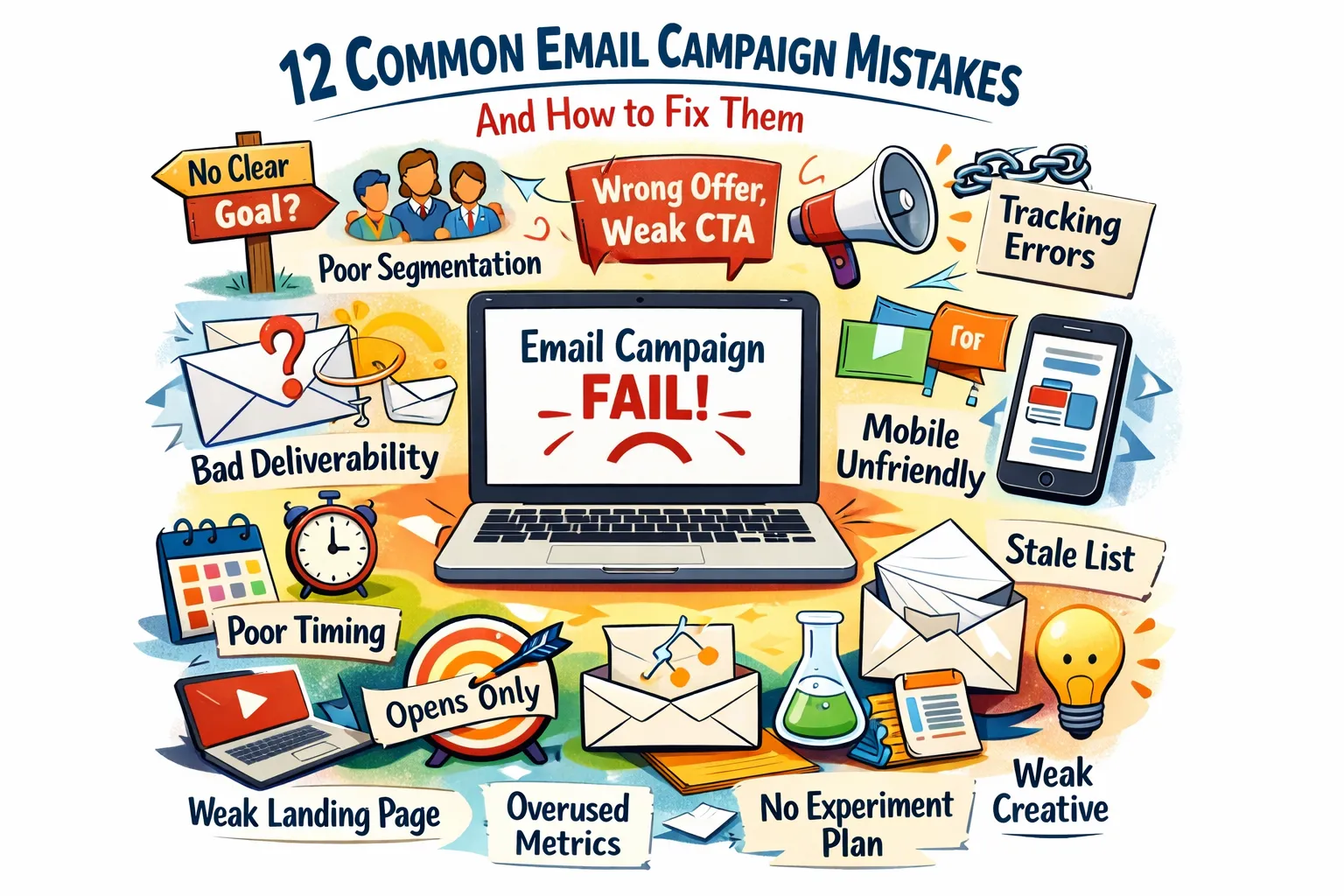
12 most common reasons email campaigns fail
— No single clear goal
Many campaigns try to drive sales, educate users, and build loyalty at the same time. The result is a blurred message. Pick one primary KPI, then shape the copy and the call to action around it. If the goal is revenue, the email should clearly lead to a purchase, not a blog post.
— Poor segmentation
Sending the same message to your entire list ignores context. A first-time visitor and a repeat buyer behave differently. Segment by recent actions, such as product views or past purchases, so the message matches intent.
— Offer and CTA mismatch
The email promises one thing, but the button leads somewhere else. For example, a message about a discount sends readers to the homepage instead of the discounted product. Use one clear CTA and make sure it leads exactly where the email says it will.
— Weak landing-page alignment
Even strong emails fail when the page behind them feels unrelated. If the email highlights a specific benefit or product, the landing page should repeat that message and remove distractions. Extra navigation and unrelated banners often reduce conversions.
— Broken or missing tracking
Teams look at opens and clicks because purchase data is missing or unreliable. Add tracking parameters to links and test conversion events before launch. Without this step, it’s impossible to know which emails actually drive revenue.
— Bad deliverability and sender reputation
If emails land in spam, nothing else matters. Common causes include high bounce rates, missing domain authentication, or sudden volume spikes. Regularly monitor these signals and fix technical basics before increasing send volume.
— Poor timing or frequency
Too many emails lead to fatigue. Too few make the brand easy to forget. A welcome series may work best over a few days, while promotions might perform better once a week. Test timing by segment instead of guessing.
— Mobile-unfriendly design
Most people read email on their phones. Long lines of text, small buttons, and heavy images slow them down. A single-column layout with large buttons and fast-loading images removes friction at the moment of decision.
— Over-reliance on opens as a success metric
High open rates often mask weak results. A clever subject line can drive curiosity without intent to buy. Shift focus to what happens after the click: purchases, sign-ups, and repeat visits.
— Stale list and poor hygiene
Inactive subscribers lower engagement and hurt deliverability. If someone hasn’t opened or clicked in months, run a short re-engagement flow. If there is still no response, remove them from regular sends.
— No experiment plan
Changing subject lines, offers, and layouts at the same time makes results impossible to read. Test one variable per campaign and measure the difference. Small, controlled tests compound over time.
— Weak creative or unclear value
Many emails talk about features instead of benefits. Readers should understand what’s in it for them within the first few seconds. Start with a clear outcome and use urgency carefully, only when it reflects reality.
FAQs
Why are my email opens high but conversions low?
High opens usually mean the subject line works. Low conversions often point to a weak offer, poor landing-page alignment, or unclear next steps. Opens show interest. Conversions show value.
Why do my emails go to spam even with good content?
Spam placement is usually caused by technical and behavioral signals, not copy alone. High bounce rates, missing authentication, or sending to inactive contacts can hurt reputation. Fix these basics before changing creative.
What KPIs should I measure for an email campaign?
This depends on the goal. For revenue-focused campaigns, track conversion rate and revenue per send. For awareness, look at unique opens and engagement on your site. For retention, measure repeat purchases and churn over time.
How often should I email my customers?
There is no universal number. Frequency depends on intent and context. New subscribers may expect several emails early on. Long-term customers often prefer fewer, more relevant messages. Test cadence by segment and watch unsubscribe and engagement trends.
How do I track revenue from email?
Add tracking parameters to every link and ensure purchase events are recorded correctly on your site. Check that revenue data flows into your analytics or CRM. Without this connection, email impact stays invisible.
Should every email sell something?
No. Sales-driven emails perform better when balanced with awareness and retention content. Educational or product-focused emails build trust and often improve long-term revenue, even if they don’t convert immediately.
It's time to try LetsExtract (it's free)
 Click here to download the LetsExtract Email Studio
The trial version will allow you to create a contact list, check email addresses and start mailing.
Related posts:
 How to verify large email lists fast
 Cold emailing in 2025: pros, cons & winning alternatives
 Email campaign analytics: key KPIs
 What is spam, and how to protect yourself from it
 How to improve email deliverability: SPF, DKIM & DMARC. Part 1
 SMTP verification: how it works & why it matters for deliverability
